Partner with Us | Call: (03) 4050 7755
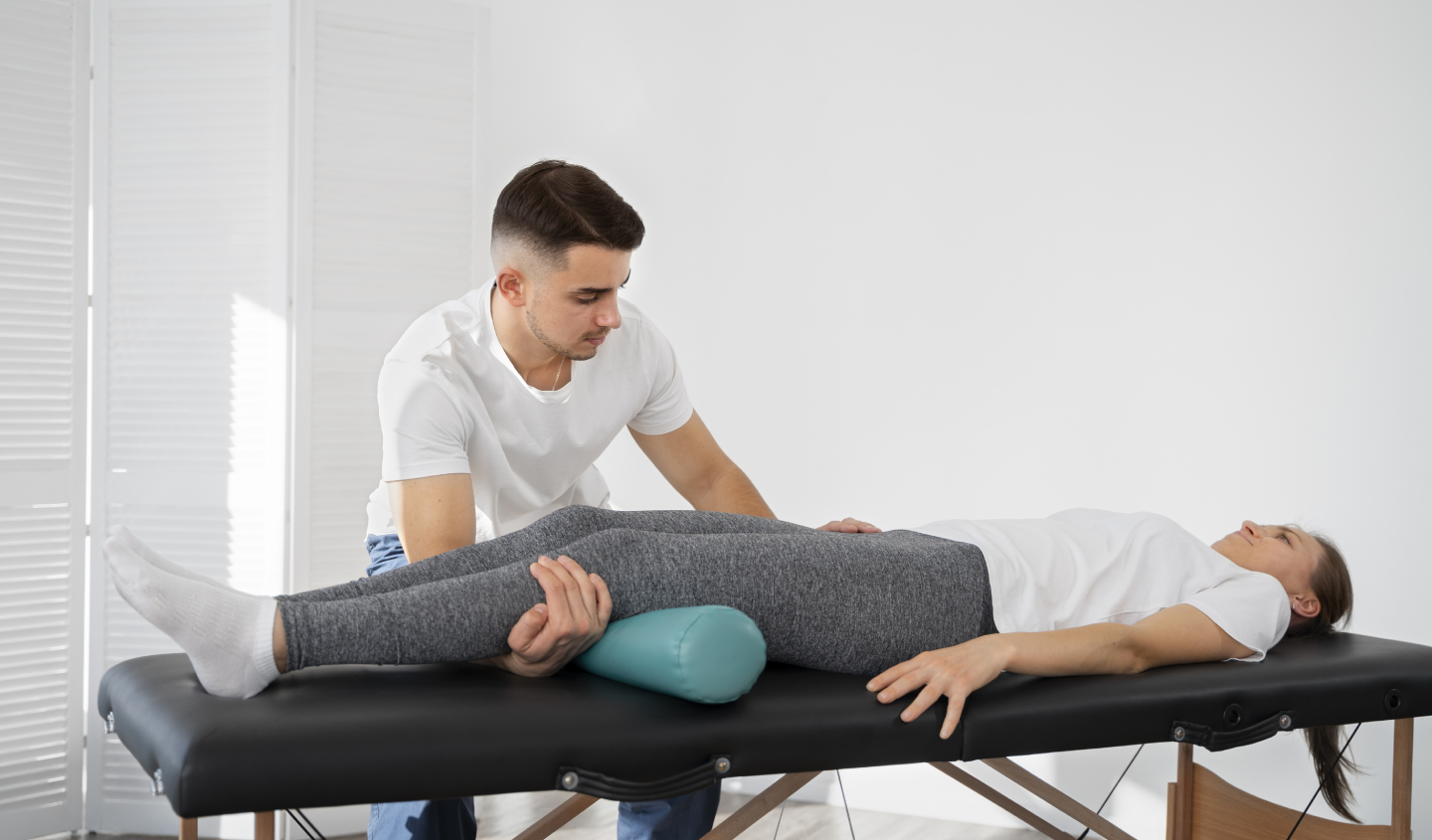
You go to stand up from the couch and the room tips sideways for a second. You roll over in bed and suddenly the ceiling is spinning. You've been fine all week, then bend down to tie your shoe and the floor lurches under you like a boat deck. If any of that sounds familiar, you already know how unsettling dizziness can be — it's not just uncomfortable, it makes you cautious about driving, working, exercising, even walking around your own house.
A lot of people assume dizziness is a "wait and see" problem, or something only a GP or an ENT specialist can sort out. In a good number of cases, though, it's a physiotherapy problem — specifically, a problem with the vestibular system, the balance mechanism sitting in your inner ear that physios are trained to assess and retrain. At Wellcare Physio's dizzy physiotherapy service, this is one of the more satisfying things we treat, because the improvement can be fast — sometimes within a single session — and it's one of the few areas of physio where you can walk out feeling measurably different than when you walked in.
This article goes through what actually causes that dizzy, off-balance feeling, which types of dizziness physiotherapy can help with (and which ones need a different kind of doctor first), what a vestibular assessment and treatment session looks like at our Truganina and Tarneit clinics, and what you can do yourself in the meantime.
"Dizziness" is a catch-all word, and it covers a few genuinely different experiences. Working out which one you've got matters, because the treatment is different for each.
Within that list, the conditions we see most often in the clinic are:
Benign Paroxysmal Positional Vertigo (BPPV). This is by far the most common cause of vertigo we see, and it's mechanical rather than neurological. Tiny calcium carbonate crystals (otoconia) that normally sit in a gel-like structure in your inner ear become dislodged and drift into one of the fluid-filled semicircular canals. When you move your head a certain way — rolling over in bed, looking up to a high shelf, bending forward to pick something up — those loose crystals shift in the fluid and send your brain a false signal that you're spinning. Episodes are usually short and sharp, lasting seconds to a couple of minutes, and are strongly tied to specific head positions.
Vestibular neuritis or labyrinthitis. An inflammation of the vestibular nerve or inner ear, often following a viral illness, causing a more constant, intense vertigo that can last days, along with nausea and difficulty walking. The acute phase is usually managed medically first; physio comes in during the recovery phase to help the brain compensate for the imbalance between the two ears.
Vestibular migraine. Increasingly recognised as a genuine cause of dizziness, this can produce vertigo or a persistent rocking, floating sensation with or without an actual headache. It often responds to a combination of medical management and vestibular rehabilitation.
Cervicogenic dizziness. Dizziness driven by the neck itself — stiff or poorly-moving upper neck joints and tight muscles can confuse the signals your brain uses for balance and spatial orientation. This is common after whiplash, after long periods of poor desk posture, or alongside chronic neck pain, and it's very much in physiotherapy's wheelhouse.
Post-concussion dizziness. Dizziness and balance problems are common after a head knock, whether from sport, a fall, or a car accident, and often persist well after other symptoms settle. Vestibular rehab is one of the main tools used in structured concussion recovery programs.
General deconditioning and age-related balance decline. As we get older, the vestibular system, the eyes, and the sensory nerves in our feet all naturally become less sharp, and if leg strength drops off too, the combination shows up as unsteadiness, especially in low light or on uneven ground. This is one of the biggest contributors to falls risk in older adults.
It's also worth saying that dizziness is more common than most people realise. It's one of the most frequent reasons people over 65 see a GP, and it's a common enough presentation in younger adults too, particularly after a virus, a bump on the head, or a long stretch of poor sleep and high stress. Growth corridors like Truganina and Tarneit have a mix of young families, older parents who've moved in with them, and plenty of people doing long commutes or spending hours at a desk — all of which show up in the range of dizziness presentations we see locally, from a toddler's grandparent with positional vertigo to a tradie with post-concussion balance issues to an office worker whose neck and dizziness have both been getting worse together.
For a genuine chunk of these presentations — BPPV, cervicogenic dizziness, the compensation phase after vestibular neuritis, post-concussion balance problems, and general balance decline — yes, and often quite reliably. Vestibular physiotherapy is a well-established, evidence-based area of practice, not an add-on service. It typically involves a detailed assessment to work out exactly which part of the balance system is misbehaving, followed by targeted treatment: repositioning manoeuvres for BPPV, or a structured exercise program for the other conditions.
What physio won't do is replace a medical work-up when one is needed. Some symptoms are red flags that need to be checked by a GP, ED, or specialist before or alongside physio, including:
If any of that applies, that's a same-day medical matter, not a physio booking. For everyone else — the person whose room spins when they roll over in bed, or who's felt persistently off-balance for weeks with no other symptoms — a physio assessment is a sensible, low-risk first step, and one that doesn't require a GP referral (though we're always happy to work alongside your GP or ENT if you're already under their care).
Because BPPV is so common and so treatable, it deserves its own explanation. If your dizziness is triggered specifically by certain movements — rolling in bed, looking up, bending over, tipping your head back to wash your hair — and each episode is brief (seconds, not hours), BPPV is the leading suspect.
The diagnostic test physios use is called the Dix-Hallpike test (or a variant called the supine roll test if the horizontal canal is suspected). You'll be guided into specific head and body positions while the physio watches your eyes closely for a particular pattern of involuntary eye movement called nystagmus. The direction and pattern of that nystagmus tells us which ear is affected and which of the three semicircular canals the loose crystals have settled in.
Once that's confirmed, treatment is a repositioning manoeuvre — the Epley manoeuvre is the best known, with the Semont manoeuvre and Barbecue roll used for other canal variants. These involve a sequence of head and body position changes designed to use gravity to guide the displaced crystals back out of the semicircular canal and into the part of the inner ear where they belong and stop causing trouble. It can trigger a burst of vertigo during the manoeuvre itself, which understandably makes some people apprehensive, but it's brief and it's the whole point of the technique.
The genuinely good news with BPPV is that a lot of people feel significantly better after just one or two treatment sessions. It's not guaranteed — some people need a few rounds, and BPPV can recur months or years later — but compared to most physiotherapy conditions, it's one of the faster wins available.
For the conditions that aren't a simple mechanical fix — vestibular neuritis recovery, vestibular migraine, cervicogenic dizziness, post-concussion balance issues, and general balance decline — treatment looks less like a single manoeuvre and more like a structured exercise program, generally built around three areas:
Gaze stabilisation exercises. These train your eyes to stay locked on a target while your head is moving, which relies on a reflex called the vestibulo-ocular reflex (VOR). If that reflex isn't working well on one side, the world seems to jump or blur every time you turn your head. Repeated, structured practice retrains it.
Habituation exercises. If certain movements or environments reliably bring on your dizziness — scrolling on a phone, busy supermarket aisles, riding in a car — controlled, repeated exposure to those triggers, in a graded way, helps your brain get used to them and stop over-reacting. This is uncomfortable in the short term (you're deliberately provoking mild dizziness) but it's one of the more effective long-term strategies.
Balance and gait retraining. Standing on foam, walking heel-to-toe, single-leg balance work, and challenges that combine head movement with walking all help rebuild the confidence and control that dizziness erodes. This is especially relevant for older adults where the goal is as much about reducing falls risk as it is about the dizziness itself.
Where the neck is a contributing factor, treatment usually also includes hands-on joint mobilisation and soft tissue work for the upper cervical spine, along with exercises to improve neck movement and the accuracy of head-repositioning (your ability to return your head to a known position with your eyes closed, which is often impaired when the neck is involved).
A couple of specific exercise names come up often enough that it's worth explaining them plainly. Brandt-Daroff exercises are a home-based habituation routine involving moving from sitting to lying on each side in sequence, repeated several times a day for a couple of weeks — historically used for BPPV when a formal repositioning manoeuvre isn't available, and still sometimes used to "finish off" residual unsteadiness after a manoeuvre has worked. Cawthorne-Cooksey exercises are an older but still relevant program combining eye movements, head movements, and progressively challenging balance and walking tasks, and form the basis of a lot of modern vestibular rehab protocols. We'll tailor whichever combination suits your specific findings rather than handing over a generic sheet — the exercises that help someone with vestibular neuritis look quite different to the ones that help someone with cervicogenic dizziness.

For older adults, dizziness isn't just uncomfortable — it's one of the more modifiable risk factors for a fall, and falls are a leading cause of injury-related hospital admission in this age group. The balance system naturally becomes less reliable with age: the inner ear's sensory cells decline gradually, eyesight and depth perception change, sensation in the feet reduces, and reaction times slow. On their own, none of these changes are dramatic, but layered together they add up to real unsteadiness, particularly in low light, on uneven footpaths, or when getting up quickly at night.
The encouraging part is that balance is trainable at any age. Structured balance retraining — practising standing on less stable surfaces, weight-shifting exercises, walking with head turns, and targeted strength work for the legs and ankles — has good evidence behind it for reducing fall risk, not just improving how steady someone feels. For families in Truganina and Tarneit looking after an older parent, a falls-focused assessment is often a good entry point even before any specific dizziness complaint, since it picks up on subtle balance deficits before they turn into an actual fall.

Cervicogenic dizziness surprises a lot of people because it doesn't sound like it should be a "neck problem" — it feels like the room, not the neck, is the issue. But your brain builds its sense of balance and spatial orientation from three main information sources working together: your inner ear (the vestibular system), your eyes, and proprioceptive signals from your joints and muscles, with the upper neck being an especially rich source of that proprioceptive input. There are dense clusters of position-sensing receptors in the small joints at the top of the cervical spine, feeding your brain constant information about where your head is relative to your body.
When those upper neck joints are stiff, injured, or surrounded by tight, overactive muscle — which happens after whiplash, after a fall, or simply from years of forward-head posture at a desk or on a phone — the signal coming from the neck stops matching what the inner ear and eyes are reporting. Your brain doesn't like that mismatch, and the result is often described as a vague, floaty, "swimming" dizziness, sometimes worse with neck movement or after sitting in one position for a while, frequently alongside neck stiffness, headaches at the base of the skull, or a feeling of pressure behind the eyes.
This is one of the more under-recognised causes of dizziness, partly because a standard vestibular test can come back essentially normal — the inner ear itself is fine, the problem is upstream in how the neck's signal is being processed. It's also one of the more satisfying types to treat, because improving neck mobility and reducing muscle guarding through hands-on treatment, combined with exercises to retrain accurate head-repositioning, often brings a noticeable reduction in the dizziness within a handful of sessions.
Migraine isn't only a headache condition. A meaningful proportion of people with a personal or family history of migraine experience episodes of vertigo, a rocking or seasick sensation, or general unsteadiness that can occur with a headache, before one, or with no headache at all. Episodes can last anywhere from minutes to days and are often accompanied by sensitivity to light, sound, or motion, and sometimes nausea severe enough to be mistaken for a stomach bug.
Vestibular migraine tends to be under-diagnosed because it doesn't fit the classic mental picture of migraine, and the dizziness itself can be so prominent that the headache component gets overlooked. Management usually sits across both medical care (looking at migraine triggers, lifestyle factors, and sometimes medication with your GP or a neurologist) and physiotherapy, where habituation-style vestibular exercises and treatment of any co-existing neck dysfunction can meaningfully reduce the frequency and intensity of episodes. It's a good example of why the history-taking part of a first physio session matters so much — the pattern of your symptoms over time often points toward vestibular migraine well before any hands-on testing does.

Walking in not knowing what to expect is part of what makes people put off booking. Here's the practical rundown of what a first session at either our Truganina or Tarneit clinic actually involves.
The conversation first. We'll ask what the dizziness actually feels like (spinning, rocking, floating, faint), what brings it on, how long episodes last, whether there's any hearing change, tinnitus, headache, or neck pain alongside it, what medications you're on, and whether you've had any falls. This history does a lot of the diagnostic work before any hands-on testing even starts.
Positional testing. If BPPV is suspected, we'll run the Dix-Hallpike or supine roll test as described above. This involves being moved into head-down positions on the treatment table, which can briefly provoke your usual dizziness — we'll explain exactly what to expect before it happens so there are no surprises.
Eye movement and balance screening. We'll check how your eyes track and how they respond to head movement, and assess your balance in a few standing and walking tasks, sometimes with your eyes closed to take vision out of the equation.
Neck assessment. Given how often the neck contributes to dizziness, we'll check the range of movement and joint mobility in your cervical spine, particularly the upper segments.
Treatment on the day. If BPPV is confirmed, we'll usually go ahead with a repositioning manoeuvre in that same first session, since there's no benefit in waiting. For other presentations, the first session is more about a thorough assessment and starting you on the first stage of a home exercise program, with hands-on neck treatment where relevant.
A word of practical advice: if you're prone to episodes triggered by movement, it's worth having someone drive you to your first appointment, at least until we know how you respond to testing and treatment. Some people feel completely fine afterward; others feel a bit off-balance or nauseous for the rest of the day, similar to mild motion sickness.
This genuinely varies with the diagnosis. As a rough guide based on how these conditions typically respond to treatment:
Home exercises matter more in vestibular rehab than in almost any other area of physio. The exercises work by repeated exposure, so the sessions in the clinic set the program and check technique and progress, but the actual retraining happens through the practice you do between visits.
While you're going through treatment, a few practical habits make a real difference to safety and confidence:
Some people dealing with vertigo or balance problems genuinely shouldn't be driving, and getting to a clinic appointment becomes its own obstacle. Older adults with a history of falls, people in the acute, nauseating phase of vestibular neuritis, or anyone whose balance is unsafe enough that a car trip feels risky are all reasonable candidates for a home visit instead. If that's your situation, it's worth knowing Wellcare Physio also runs a mobile physiotherapy service that brings the same assessment and treatment to your home rather than requiring you to travel — useful for the acute stages of dizziness as much as it is for general mobility and pain conditions.
Can physio actually cure vertigo, or does it just manage it?
For BPPV, physio genuinely resolves it in most cases — the repositioning manoeuvre moves the displaced crystals back where they belong, it isn't just symptom management. For the other causes of dizziness, the goal is retraining the brain's compensation, which for many people leads to a full or near-full recovery, though the timeline is longer and more variable than with BPPV.
Do I need a referral from my GP?
No, you can book directly for a dizzy physiotherapy assessment without a referral. If you're already seeing a GP, ENT, or neurologist about it, we're happy to liaise with them and work alongside whatever plan they've put in place.
Will the assessment make me feel dizzy?
Some of the testing is specifically designed to reproduce your symptoms briefly, because that's how we confirm the diagnosis and identify which ear or canal is involved. It's short-lived, and we talk you through exactly what to expect before each test so it's not a surprise.
Is dizziness after a car accident or workplace injury covered?
If your dizziness followed a car accident or a workplace incident, it may be covered under TAC or WorkCover depending on your circumstances — it's worth mentioning this when you book so we can check eligibility and handle the paperwork correctly from the start.
I've had dizziness for years and just live with it — is it too late to do anything about it?
Not usually. Vestibular rehabilitation can still help with longstanding dizziness, including cases that have been present for years, because the exercises work by retraining the brain's compensation mechanisms rather than relying on a narrow treatment window. It's worth an assessment even if the problem feels old and settled-in.
What's the difference between what a physio does for dizziness and what an ENT or audiologist does?
ENT specialists and audiologists investigate and manage the underlying ear pathology, including hearing loss, structural issues, or conditions like Ménière's disease, sometimes with imaging, hearing tests, or medication. Physios focus on the mechanical and neurological retraining side — the repositioning manoeuvres and the exercise-based rehabilitation. Many people need both, and it's common to be referred between the two depending on what the assessment finds.
How do I know if it's BPPV or something else?
The clearest signs pointing to BPPV are episodes that are brief (seconds to a couple of minutes), clearly triggered by a specific head movement, and settle completely between episodes. If your dizziness is constant, lasts hours, or comes with hearing changes, headache, or neurological symptoms, it's more likely to be one of the other causes discussed above, and worth a proper assessment to sort out which.
Can children get BPPV or vestibular problems?
It's less common than in adults, but children and teenagers can experience vestibular migraine, dizziness after a concussion (particularly common in kids who play contact sport), and occasionally BPPV. The assessment approach is largely the same, adapted to be age-appropriate, and it's worth getting checked rather than assuming a child will simply grow out of it.
Will I need to keep doing exercises forever?
Generally no. The exercise programs for most vestibular conditions are time-limited — typically weeks rather than months — because the goal is to retrain the brain's compensation, and once that's achieved, it tends to hold. Some people with recurrent BPPV or an ongoing neck issue benefit from an occasional maintenance session, but daily lifelong exercises aren't the norm.
Dizziness is one of those symptoms people tend to put up with far longer than they need to, partly because it's hard to describe and partly because it's not obvious who to see about it. If your symptoms fit the profile of BPPV or another vestibular, cervicogenic, or balance-related cause, physiotherapy is a genuine, evidence-based treatment option, not a fallback after everything else has failed. If anything on the red-flag list above applies to you, see a doctor first. Otherwise, an assessment is a reasonable next step, whether you come into our Truganina or Tarneit clinic or, if getting there safely is the issue, arrange a home visit instead. If you've been putting off doing anything about dizziness that's been quietly limiting your week, this is usually a faster fix than people expect — and if you want to read more about how we approach musculoskeletal and injury-based physiotherapy locally, our piece on choosing between a physio, chiro, and osteo in Tarneit and Truganina is a useful companion read.