Partner with Us | Call: (03) 4050 7755
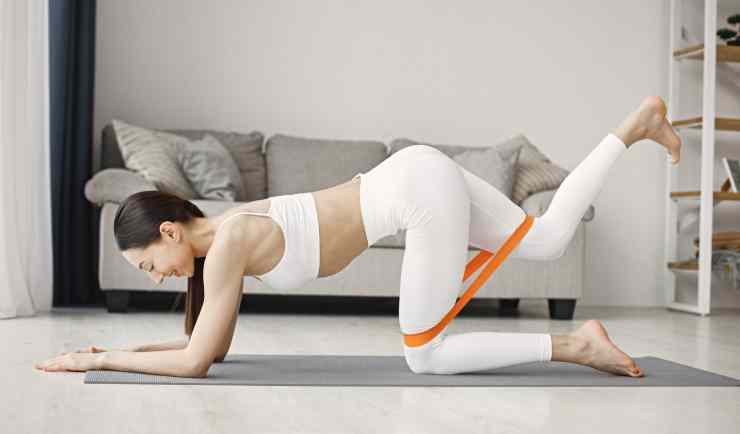
If you've ever come out of a lower back flare-up and had a physio tell you "you need to build up your core," you've probably also had the next thought: how, exactly? Doing forty sit-ups a day doesn't fix a stiff, guarded back, and neither does forcing yourself through a general gym program that ignores the fact that one side of your body isn't pulling its weight. This is the gap clinical pilates was built to fill, and it's one of the more underused tools in the Truganina and Tarneit area given how well-suited it is to the kind of long commutes, desk jobs, and young-family lifting that define a lot of daily life out here.
This isn't a studio pilates class with candles and a playlist. Clinical pilates is pilates run by a physiotherapist, built around your actual assessment findings, and adjusted week to week as your body changes. It sits in an odd spot in people's minds — some think it's just exercise with a trendy name, others think it's only for flexible young women in activewear. Neither is accurate. Here's what it actually is, who it helps, what the evidence says, and what to expect if you book in at Wellcare Physio's clinical pilates service in Truganina or Tarneit.
Clinical pilates takes the core principles of traditional pilates — controlled movement, breath, alignment, and building strength from the inside out rather than just working the big, visible muscles — and applies them under the supervision of a physiotherapist who has assessed your specific injury, pain pattern, or movement dysfunction first. The exercises are prescribed, not generic. Two people with "lower back pain" might get almost entirely different pilates programs depending on whether their issue is a stiff thoracic spine that's overloading the lumbar segments below it, a disc injury that flares with flexion, or weak glutes that are forcing the lower back to do work it shouldn't have to do.
The equipment side is where a lot of people get confused. Clinical pilates can be mat-based (using body weight, small props like resistance bands, fit balls, and light hand weights) or reformer-based (using a sprung, adjustable machine with a sliding carriage and adjustable resistance). Both approaches follow the same underlying principles; the reformer just adds resistance and support in a way that lets a physio fine-tune load more precisely, which is useful for people who are early in a rehab process or need more control than bodyweight alone allows.
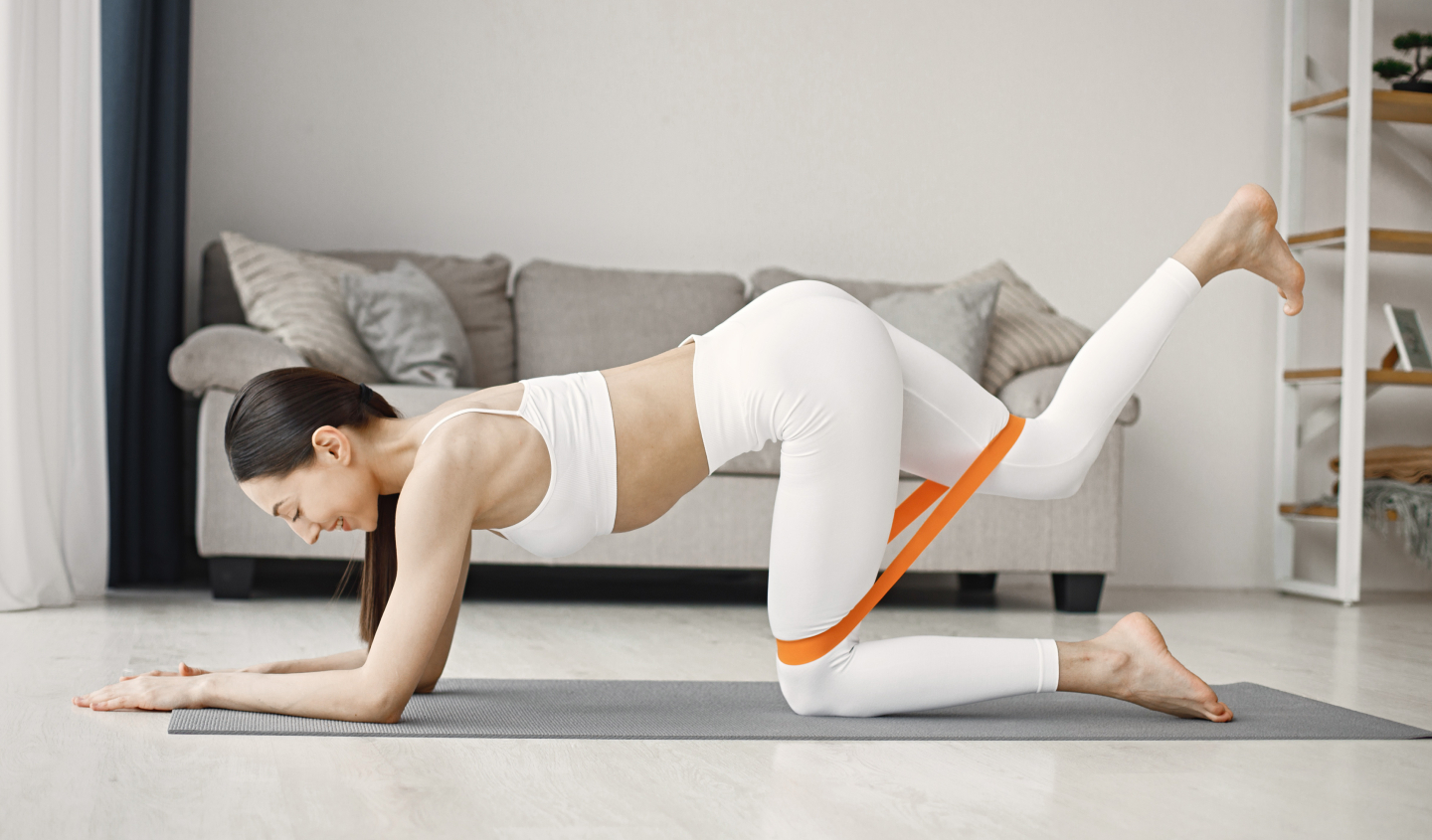
What actually separates clinical pilates from a regular pilates class is the assessment behind it. Before you do a single exercise, a physiotherapist looks at how you move — how your spine, hips, and shoulders behave under load, where you're stiff, where you're weak, where you're compensating — and builds a program around what they find. That program gets adjusted as you go. If an exercise is aggravating something, it gets modified or dropped. If you're progressing well, load or complexity gets added. That ongoing clinical reasoning is the entire point, and it's the reason clinical pilates sits under physiotherapy rather than under group fitness.
The condition most people associate with clinical pilates is lower back pain, and for good reason — it's one of the more common referrals into the program, and we've written in more depth about back pain specifically in our piece on lower back pain relief for Truganina and Tarneit residents. But the applications go well beyond that. In the clinic, the people who tend to get the most out of clinical pilates fall into a few broad groups:
It's worth being straightforward about who it's less suited to as a starting point. If you're in the acute, sharp-pain phase of a fresh injury, clinical pilates usually isn't the first thing we reach for — that's more a case for pain management, gentle mobility work, and manual therapy first, with pilates introduced once things have settled enough to tolerate loaded movement. Your physio will tell you honestly if that's where you're at rather than pushing you into a program before your body's ready for it.
It's a fair question, because "pilates" gets thrown around loosely as a wellness buzzword, and it's reasonable to want to know whether clinical pilates is genuinely effective or just popular. The research on this is reasonably mature at this point, particularly for chronic low back pain, which is the most studied application.
The consistent finding across systematic reviews is that pilates-based exercise improves pain, function, and disability in people with chronic low back pain, and that it's at least as effective as other structured exercise approaches when the dose (frequency, intensity, duration) is comparable. Where clinical pilates tends to show a specific edge is in the early stages of rehab — some trials point to faster functional recovery in the initial weeks compared with general exercise, with outcomes evening out over the longer term. There's also decent evidence specifically around core muscle activation — pilates-based programs reliably improve the thickness and activation of the deep stabilising muscles of the trunk, which is the mechanism most clinicians point to when explaining why it helps chronic back pain in particular.
None of that means pilates is a magic fix that outperforms every other form of exercise for every person. What the evidence actually supports is narrower and more useful than that: clinical pilates is a legitimate, evidence-based exercise medicine tool, particularly well suited to people whose pain involves poor movement control, fear of movement, reduced body awareness, or a mismatch between how strong someone thinks they are and how their body is actually functioning under load. That's a lot of the lower back pain population we see in the clinic, which is exactly why it gets used as often as it does.
The first session is not just handed to you as a class. It starts with an individual assessment, generally 30 to 45 minutes, where your physiotherapist works through:
From there, you'll usually be introduced to your first handful of exercises — enough to learn correct technique without overwhelming you, and pitched at a level your body can actually manage on day one. If you're doing reformer-based sessions, this includes getting familiar with the equipment itself, which looks intimidating before you've used it and feels a lot more straightforward once you have.
Sessions after that first one typically run 45 minutes to an hour, either one-on-one or in small groups of similar ability once you're established on your program, and the exercises get reviewed and progressed regularly — not left on autopilot for months on end.
This isn't really a preference question you make on your own — it comes out of the assessment. That said, it's worth understanding the practical difference so the recommendation makes sense when your physio explains it.
Mat-based clinical pilates uses your body weight, the floor, and small equipment like resistance bands, fit balls, foam rollers, and light weights. It's accessible, doesn't rely on a machine being free, and is often where people start because it's easier to translate into a home exercise program between clinic visits. The trade-off is that it's harder to fine-tune resistance precisely, and some positions are genuinely difficult for someone who's deconditioned or in significant pain to get into safely on the floor.
Reformer-based clinical pilates uses the sprung carriage system to add or reduce resistance smoothly, and to support body weight in ways a mat can't. This makes it particularly useful early in rehab, for people who need more support (post-surgery, significant pain, poor initial strength), or for people who've plateaued on mat work and need more precise loading to keep progressing. It also allows a huge range of exercise variations from the same piece of equipment, which keeps programs varied over a longer course of treatment.
Plenty of people end up doing a mix of both over the course of their rehab — reformer work in the clinic combined with a simplified mat-based program to keep up between sessions. Your physio will steer this based on what your body needs at each stage rather than what sounds more appealing.
It helps to know roughly what to expect rather than walking in blind. A typical progression looks something like this, though the exact pace depends entirely on your presentation:
Weeks 1 to 2 — Foundation and control. The focus is on learning correct activation patterns (deep core, pelvic floor where relevant, glute engagement) and basic movement control, usually with low load and a lot of coaching on technique. This stage can feel almost too easy for people who are otherwise fit — that's intentional. Getting the pattern right matters more than working hard at this point.
Weeks 3 to 6 — Building strength and endurance. Once movement patterns are reliable, load, repetitions, and exercise complexity increase. This is usually where people start noticing a real difference in day-to-day function — less stiffness getting out of bed, more confidence bending and lifting, better tolerance for sitting through a workday.
Weeks 6 onward — Progression toward specific goals. The program shifts to reflect what you actually need it for, whether that's returning to running, tolerating a physical job, managing a chronic condition long-term, or simply maintaining the gains you've made. Some people taper down to a maintenance frequency (once a week, or a home program with occasional check-ins); others with more complex or recurring issues continue at a higher frequency for longer.
Most people attend one to two sessions a week during the active phase of a program, though this varies with how significant the underlying issue is and how much you're able to reinforce the work with a home program between visits.
Truganina and Tarneit have grown fast as outer-Melbourne suburbs largely because of exactly this pattern: a lot of residents commute into the city or across to other employment hubs, and a lot of others work from home in setups that were never properly planned out. Both scenarios produce a very recognisable pattern — tight hip flexors and hamstrings from prolonged sitting, a rounded upper back and forward head posture, weak glutes that have essentially switched off from underuse, and a lower back that ends up compensating for all of it.
Clinical pilates is well suited to this pattern specifically because it addresses the whole chain rather than just stretching the tight bits. A program built for a desk-based presentation typically works on thoracic spine mobility (to take pressure off the neck and lower back), hip flexor length combined with glute activation (rather than just stretching, which often doesn't hold if the muscles opposing the tightness stay weak), and deep core and scapular control to support better sitting posture without it feeling like a constant conscious effort. The aim isn't to give you one more thing to think about at your desk — it's to build enough underlying strength and mobility that good posture becomes easier to hold without trying.
This comes up often enough locally, given how many young families are in the Truganina and Tarneit area, that it's worth addressing directly, even though it deserves its own more detailed discussion elsewhere. Pilates-style exercise is widely used antenatally and postnatally because it works well with the changes happening to the core, pelvic floor, and posture through pregnancy and recovery. That said, this isn't something to self-manage from a general class — pregnancy and postnatal presentations need individual assessment, particularly around pelvic floor function and any abdominal separation, and programs need modifying stage by stage as pregnancy progresses and again through postnatal recovery. If this applies to you, say so at your assessment so the program is built around it properly from day one rather than adapted after the fact.
One of the more common ways people end up in a clinical pilates program is after the acute phase of an injury or surgery has already been managed, and the focus shifts to rebuilding strength and control properly rather than just getting back to "good enough." This matters more than people expect. It's entirely possible to come out of a knee reconstruction, a disc injury, or a shoulder repair with pain resolved and basic function restored, but with the underlying movement pattern still faulty — favouring one side, avoiding a particular range, or relying on the wrong muscles to do the job. Left unaddressed, that's exactly the kind of gap that leads to re-injury or a new problem developing somewhere else down the chain.
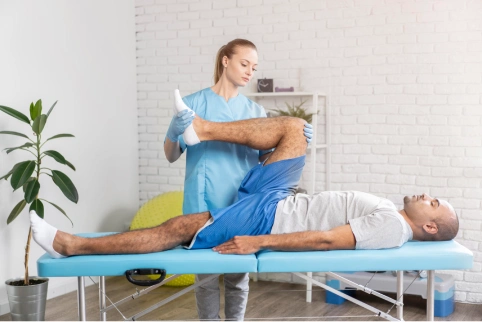
Clinical pilates is well suited to this stage of rehab because it allows precise control over load, range, and complexity, all of which can be dialled up or down carefully as tissue heals and confidence returns. After a lumbar disc injury, for example, early work might focus on pain-free core activation and controlled movement within a safe range, gradually progressing toward more functional loaded movements as tolerance improves. After a knee reconstruction, the focus often shifts toward single-leg control, hip and glute strength (since the hip has an outsized influence on how the knee tracks under load), and rebuilding confidence in movements the knee has been protected from during the earlier stages of rehab. After a shoulder repair, scapular control and rotator cuff endurance typically take priority before working back up to overhead or loaded positions.
The common thread across all of these is progression that's matched to actual tissue healing timeframes and to how your body is genuinely responding, not to a generic program pulled off a rehab protocol sheet. This is one of the clearer arguments for clinical pilates being run by a physiotherapist rather than a general instructor — the clinical reasoning behind when to progress, when to hold, and when to back off is the same reasoning that guides the rest of your rehab, just applied through pilates-based exercise rather than more traditional strengthening drills.
A few misconceptions come up often enough in the clinic that they're worth addressing directly.
"It's just stretching." Stretching and mobility work are part of it, but the bulk of clinical pilates is strength and motor control work — teaching muscles to fire in the right sequence, at the right time, under load. Plenty of people finish a session having worked harder than they expected to.
"It's only for back pain." Back pain is the most common referral, but it's far from the only one. Shoulder rehab, hip and knee rehab, postural issues, hypermobility management, and general strength and balance work for older adults are all common reasons people end up in a program.
"It won't do anything if I'm already fit." Being generally fit and having good control of your deep core and stabilising muscles are two different things, and it's common for people who run, lift weights, or play sport regularly to still have a genuine gap in this area — often exactly why they keep getting the same niggle in the same spot despite otherwise solid fitness.
"You need to be flexible to start." Covered in more detail below, but worth restating here — flexibility isn't a prerequisite, and in some cases (particularly hypermobile people) too much flexibility relative to strength is actually part of the problem being addressed.
"It's basically the same as a normal gym class with a different name." The exercises can look superficially similar, but the individual assessment, the clinical reasoning behind exercise selection, and the ongoing adjustment based on how your specific injury or pattern is responding are what separate clinical pilates from a general class. That distinction is the entire reason it sits within physiotherapy.
Progress in clinical pilates is driven as much by what happens between sessions as by what happens during them. Most programs include a simplified home component — often just four to six key exercises drawn from your clinic session, chosen because they're safe to do unsupervised and reinforce the specific pattern you're working on. This might be five to ten minutes a day, or a slightly longer session two to three times a week, depending on what you're working on and how much time you realistically have.

The exercises given for home tend to be the foundational ones — activation and control work rather than anything requiring equipment or close supervision. As you progress, your physio will update this home component alongside your in-clinic program, so it keeps pace with what you're capable of rather than staying static for months. If you're finding a home exercise uncomfortable, confusing, or you're simply not managing to fit it in, say so at your next session — the program is meant to work with your actual life, not against it, and there's usually a practical adjustment available.
No, and this is probably the biggest misconception keeping people from trying it. Clinical pilates is built around your current ability, not some baseline level of fitness or flexibility you're expected to arrive with. People who've never exercised regularly, people recovering from injury who can barely tolerate basic movement, and people well into their seventies and eighties doing balance and strength work all go through clinical pilates programs successfully, because the whole model is individualised progression rather than keeping up with a class standard. If anything, people who are already very flexible sometimes need the opposite emphasis — more work on control and strength rather than more stretching, since excess mobility without the strength to control it is its own risk factor for injury.
Nothing complicated here. Comfortable, non-restrictive clothing you can move freely in — the same as you'd wear to any exercise session. Grip socks are worth having if you're doing reformer-based work, since bare feet or regular socks can slip on the equipment; most clinics, including ours, can point you toward these or have options available if you don't already own a pair. Bring water, and if you're coming straight from work, allow a few minutes either side so you're not rushing in stressed or rushing out sweaty.
Is clinical pilates covered by Medicare or private health insurance?
Clinical pilates sessions delivered by a physiotherapist are generally claimable under private health extras cover for physiotherapy, the same as a standard consultation, though this depends on your specific policy and level of cover, so it's worth checking with your fund. It isn't separately Medicare-rebateable outside the usual physiotherapy referral pathways (such as a GP Chronic Disease Management plan, where eligible).
How is this different from a normal pilates class at a gym or studio?
A gym or studio pilates class is instructed, generally by a pilates instructor rather than a physiotherapist, and follows a set class structure aimed at a general population. Clinical pilates is prescribed by a physiotherapist based on your specific assessment findings, adjusted as you progress, and directly targets an identified injury, pain pattern, or movement deficit. The exercises can look similar from the outside, but the reasoning behind what you're doing and why is fundamentally different.
How long until I notice a difference?
This varies with what you're treating, but many people notice improved awareness of their core and better movement control within the first couple of weeks, with more meaningful changes in pain and function building over four to six weeks of consistent attendance. Chronic, longstanding issues generally take longer to shift than a recent flare-up.
Can I do clinical pilates alongside other treatment, like dry needling or manual therapy?
Yes, and this is common. Many programs combine clinical pilates with hands-on treatment, particularly early on when reducing pain and improving mobility needs to happen before loaded exercise becomes comfortable or useful.
Do I need a referral?
No referral is needed to book a clinical pilates assessment — you can self-refer directly. If you're being treated under a GP care plan, TAC, WorkCover, or similar, let the clinic know when booking so eligibility and paperwork can be sorted correctly from the start.
What if an exercise hurts?
Tell your physio immediately rather than pushing through it. Programs are meant to be challenging within a tolerable range, not painful, and exercises get modified on the spot if something isn't agreeing with you. This is one of the main advantages of having a physiotherapist running the session rather than following a generic class or video.
How often will I need to come?
Most programs run one to two sessions a week during the active phase, though this depends on the severity of what's being treated and how much you're able to do independently between visits. Your physio will recommend a frequency based on your specific goals rather than a one-size-fits-all schedule.
Is it suitable for older adults?
Very much so. Controlled, progressive strength and balance work is one of the better-supported ways to reduce fall risk and maintain independence as people age, and clinical pilates translates well into that goal because it's individually paced and closely supervised.
If you've been putting off doing anything about a stiff back, recurring niggles, or the vague sense that your core "just doesn't work" the way it used to, clinical pilates is a reasonable, evidence-supported place to start — and starting with a proper assessment rather than guessing your way through a generic program tends to save time in the long run rather than costing it. Wellcare Physio runs clinical pilates out of both the Truganina clinic and the Tarneit clinic, with an initial assessment used to work out whether mat-based work, reformer-based work, or a mix of both suits what you're dealing with.
The honest summary is this: clinical pilates isn't a trend and it isn't a replacement for proper diagnosis and hands-on treatment when that's what's needed first. It's a structured, physiotherapist-led exercise approach with reasonable evidence behind it, particularly for chronic back pain, post-injury rehab, and the kind of postural strain that builds up from sitting and commuting. If that sounds like where you're at, an assessment is the sensible next step rather than trying to guess your way through it with generic exercises pulled off the internet.