Partner with Us | Call: (03) 4050 7755
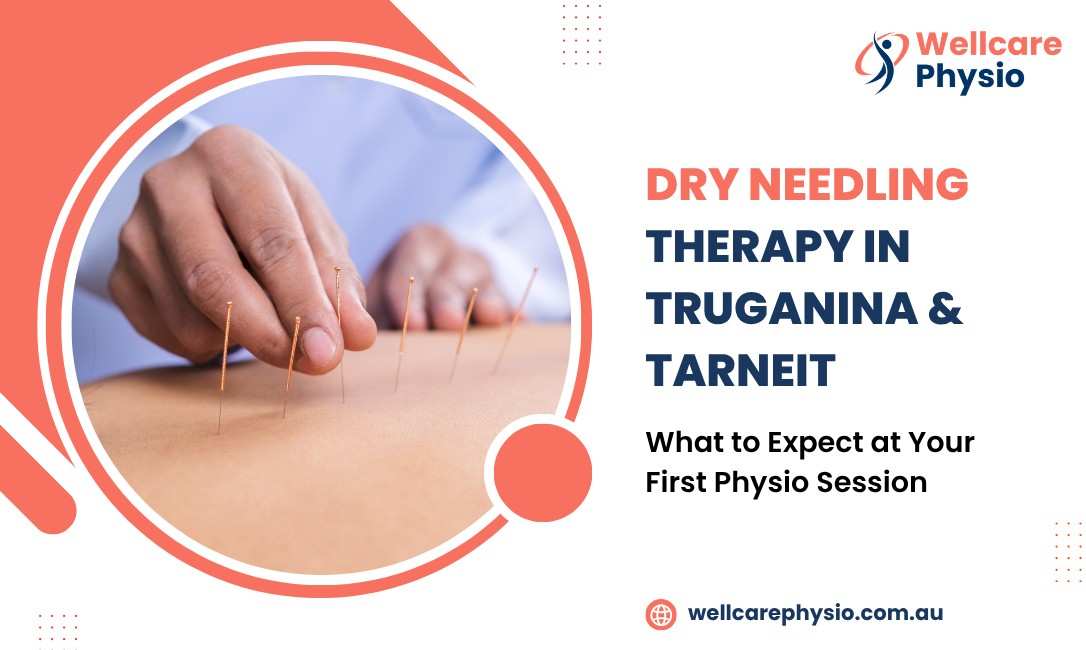
If you've been dealing with persistent muscle pain, tightness, or injury that just won't seem to resolve, you may have heard about dry needling — a technique that's growing rapidly in popularity among residents across Truganina and Tarneit.
At Wellcare Physio Truganina, dry needling is one of our most requested treatments. Patients are often surprised by how quickly it provides relief, even for long-standing pain that hasn't responded to other treatments.
But what exactly is it? And is it right for you?
Dry needling is a physiotherapy technique that involves inserting fine, sterile needles into specific points in the muscle called trigger points — tight, knotted areas that cause localised pain or refer pain to other parts of the body.
The term "dry" simply means no medication or liquid is injected. The needle itself is the treatment.
A common question from Truganina and Tarneit patients is whether dry needling is the same as acupuncture. While both use similar needles, they are fundamentally different:
| Dry Needling | Acupuncture | |
| Origin | Western sports medicine | Traditional Chinese medicine |
| Target | Muscle trigger points | Energy meridians |
| Goal | Release muscle tension, reduce pain | Restore energy flow and balance |
| Practitioner | Physiotherapist | Acupuncturist |
Dry needling is grounded in anatomy, neurophysiology, and musculoskeletal science — making it a natural part of a physiotherapy treatment plan.
When a needle is inserted into a trigger point, it causes a brief, involuntary muscle twitch — known as a local twitch response. This twitch is actually a good sign. It signals that the trigger point has been activated and will begin to release.
This process:
The result is a muscle that is more relaxed, less painful, and more responsive to rehabilitation exercises.
Our Wellcare Physio team in Truganina uses dry needling to treat a wide range of musculoskeletal conditions commonly seen in our local community, including:
We understand that many Truganina and Tarneit patients feel nervous about their first dry needling appointment. Here's exactly what to expect:
Your physiotherapist will begin with a thorough assessment of your pain, movement, and muscle function. We identify which muscles are harbouring trigger points that are contributing to your symptoms.
We'll explain exactly where we'll be needling and why. Your comfort and understanding are our priority — we never proceed without your informed consent.
The needles used are extremely fine — much thinner than a standard injection needle. Most patients describe the insertion as a mild pressure or a tiny pinch. When the needle hits a trigger point, you may feel a brief, deep aching sensation or a muscle twitch — this is completely normal and is actually a sign the treatment is working.
After the needles are removed, your physio may apply some gentle massage or stretching to enhance the effects. Sessions typically last 20–40 minutes, depending on how many areas are being treated.
Some patients feel immediate relief. Others may experience mild muscle soreness for 24–48 hours, similar to how you might feel after a good workout. This is a normal response and usually settles quickly. Drinking plenty of water and gentle movement afterwards is encouraged.
Yes. When performed by a qualified and trained physiotherapist, dry needling is very safe. At Wellcare Physio Truganina, we only use single-use, sterile needles that are immediately disposed of after treatment. Our physiotherapists hold specific qualifications in dry needling and follow strict clinical protocols.
Does dry needling hurt?
Most patients are pleasantly surprised by how minimal the discomfort is. The needles are very fine and the sensation is usually brief. Any discomfort during a muscle twitch typically passes within a few seconds.
How many dry needling sessions will I need?
This varies by condition and individual. Many patients feel noticeable improvement after 1–3 sessions. For chronic conditions, a longer course of treatment combined with exercise rehabilitation gives the best long-term results.
Can I exercise after dry needling?
We generally recommend light activity and avoiding intense exercise for 24 hours after a session, particularly if you experience some post-treatment soreness.
Who is dry needling NOT suitable for?
Dry needling is not recommended for people with needle phobia, blood clotting disorders, or during pregnancy (in certain regions of the body). Your physio will discuss your full medical history before proceeding.
Is dry needling covered by private health insurance in Australia?
Yes, in most cases dry needling performed by a physiotherapist is covered under physiotherapy extras with your private health fund. Check your specific policy for details.
Do you offer bulk billing for dry needling at Wellcare Physio Truganina?
Yes! If you have a valid GP-issued Chronic Disease Management (CDM) or Enhanced Primary Care (EPC) care plan, we offer bulk billing — no out-of-pocket cost whatsoever. Bring your care plan and Medicare card and we handle everything else. Speak to your GP to find out if you qualify for a care plan.
Do you treat WorkCover and TAC patients?
Absolutely. Wellcare Physio Truganina treats patients under both WorkCover and TAC claims. Dry needling and other physiotherapy treatments are commonly included in approved injury management plans. We manage all the paperwork and liaise with your insurer directly — no upfront payment needed for approved claims.
If you're dealing with persistent muscle pain, tightness, or a stubborn injury, dry needling at Wellcare Physio could be the breakthrough you've been looking for.
📍 Wellcare Physio Truganina Level 1, 185 Woods Rd, Truganina VIC 3029 (Central Shopping Centre)
📍 Wellcare Physio Tarneit At Tarneit Healthplus, 1071 Leakes Road, Tarneit VIC 3029, Australia
📍 At Tarneit Central Medical, Shop T-21/540 Derrimut Rd, Tarneit VIC 3029, Australia
📞 03 4050 7755
Conveniently located for residents of Truganina, Tarneit, Hoppers Crossing, Wyndham Vale, and greater Wyndham.
Wellcare Physio proudly serves the Truganina and Tarneit communities with evidence-based physiotherapy including dry needling, electrotherapy, cupping, manual therapy, and rehabilitation.